Proxmox Virtual Environment (Proxmox VE) is an open-source server virtualization management platform that combines KVM virtualization and LXC containers with software-defined storage and networking. When deployed on dedicated hardware, Proxmox becomes a powerful foundation for private cloud infrastructure, development environments, production workloads, and disaster recovery systems. Unlike shared hosting or standard VPS solutions, dedicated Proxmox servers give you complete control over hardware resources, storage configurations, and network topology.
The dedicated server approach eliminates the "noisy neighbor" problem common in shared environments. Your VMs and containers have guaranteed access to CPU cores, RAM, and storage I/O without competition from other customers. This predictable performance is essential for production databases, high-traffic web applications, render farms, CI/CD pipelines, and any workload where performance consistency matters more than raw peak performance.
Self-Managed vs. Fully Managed Options
Self-Managed Dedicated Proxmox is designed for teams with Linux systems administration expertise who want complete control over their virtualization platform. We provide the dedicated hardware, network connectivity, and data center infrastructure—you handle Proxmox installation, configuration, updates, backup strategy, and day-to-day operations. This option offers maximum flexibility and lowest cost, but requires in-house technical capabilities. You'll need comfort with command-line administration, storage pool management (ZFS, LVM, Ceph), and network configuration including VLANs and software-defined networking.
Fully Managed Dedicated Proxmox includes everything in the self-managed option plus our team handles the entire platform lifecycle. We install and configure Proxmox according to your requirements, apply security updates and patches, monitor system health and performance, manage backup systems, and provide support for platform-level issues. You maintain administrative access to create and manage VMs and containers, but we ensure the underlying Proxmox infrastructure remains stable, secure, and optimized. This option is ideal for development teams who want dedicated resources without dedicating staff to infrastructure management.
Ideal Use Cases for Dedicated Proxmox Servers
VM Consolidation and Private Cloud: Replace aging physical servers or expensive VMware infrastructure with cost-effective Proxmox hosts. Deploy dozens or hundreds of VMs on a single dedicated server, creating your own private cloud with complete control over resource allocation, networking, and storage. Proxmox's web-based management interface makes it easy to provision new VMs, take snapshots, and manage the entire environment without requiring specialized desktop software.
High I/O and Database Workloads: Database servers, caching systems, and applications with intensive disk requirements benefit from dedicated NVMe storage and guaranteed IOPS. Configure ZFS pools with different performance characteristics for different workload types, or deploy Ceph distributed storage for redundancy across multiple nodes. With dedicated hardware, you can optimize storage configurations specifically for your access patterns without constraints imposed by shared infrastructure.
Development and Testing Environments: Create isolated development, staging, and testing environments that mirror production configurations. Proxmox's snapshot and template features enable rapid provisioning of clean test environments, while dedicated resources ensure consistent performance during load testing and continuous integration workflows. Development teams can experiment with different configurations, operating systems, and architectures without affecting production systems or competing for resources with other users.
Multi-Server Deployments: Need multiple Proxmox hosts? We can provision additional dedicated servers that work together. Proxmox supports clustering for centralized management, though implementation and ongoing cluster maintenance requires significant expertise. We're happy to discuss multi-server architectures, but recommend starting with a single dedicated host and expanding as your requirements become clear.
Dedicated Security Appliance Protection
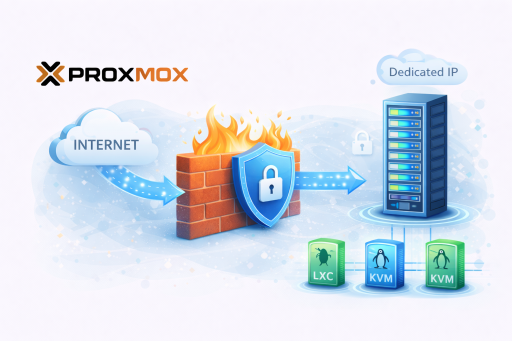
Every dedicated Proxmox server sits behind a dedicated security appliance that enforces authorized access before traffic reaches your virtualization host. This isn't shared firewall infrastructure—it's a dedicated hardware security layer specifically protecting your Proxmox server. The security appliance provides multiple layers of protection including stateful packet inspection, connection rate limiting, geographic IP filtering, and protocol-specific attack mitigation.
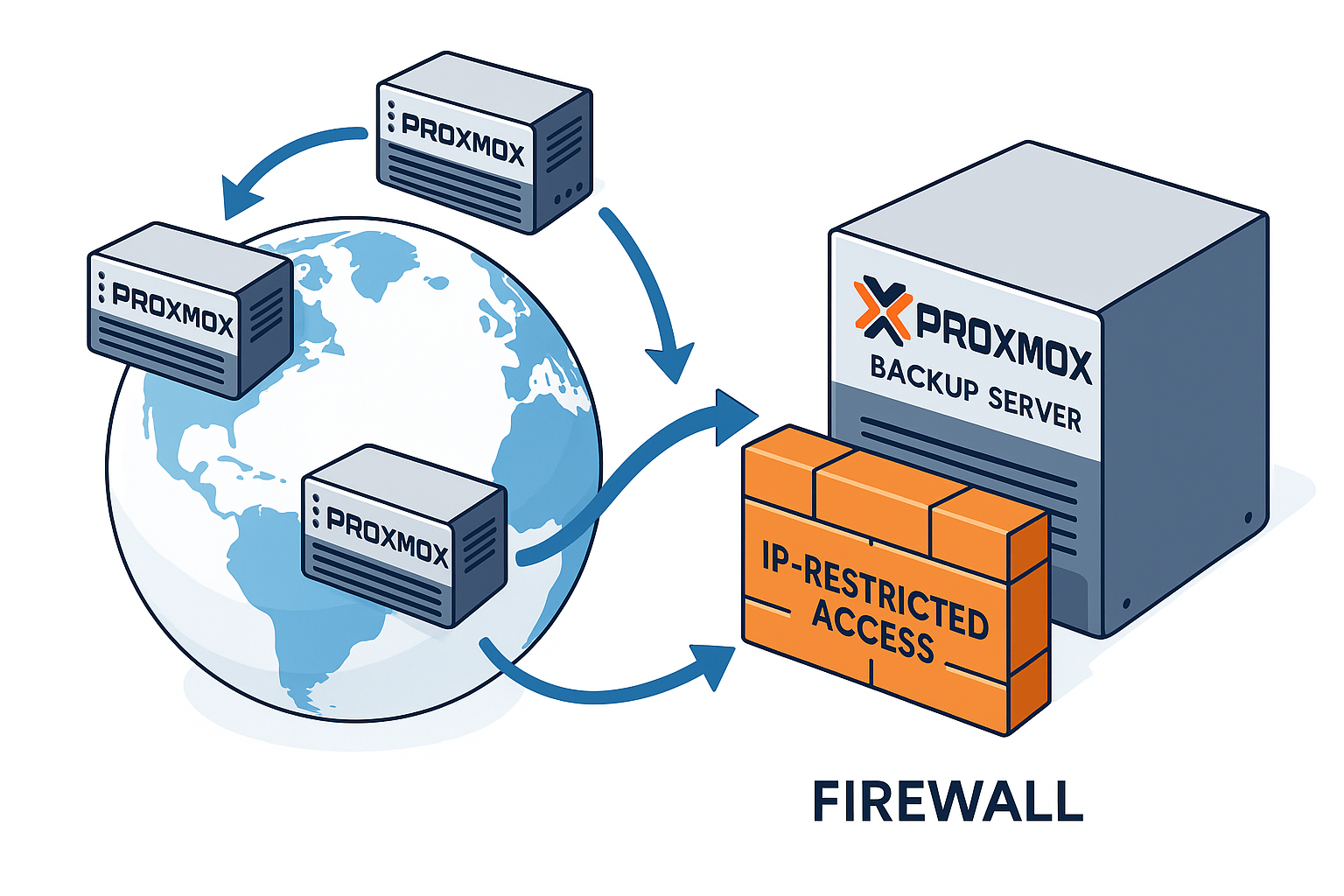
The dedicated security appliance approach means your Proxmox web interface, SSH access, and VM traffic all pass through enterprise-grade filtering before reaching the host. You define which IP addresses or networks can access Proxmox management interfaces, which ports are exposed for your VMs, and how traffic is routed to different virtual machines. This is particularly important for Proxmox hosts because the hypervisor layer is a high-value target—compromising the host means compromising every VM running on it. The dedicated security appliance ensures that only authenticated, authorized connections reach your Proxmox server.
For customers running production workloads, this dedicated security layer is non-negotiable. It protects against brute-force SSH attacks, web interface exploitation attempts, and denial-of-service traffic that could destabilize the entire virtualization platform. You maintain complete administrative control over security policies through the appliance's management interface, allowing you to update access rules, review connection logs, and implement custom filtering as your security requirements evolve.
Technical Specifications and Hardware Options
Our dedicated Proxmox servers feature current-generation Intel Xeon or AMD EPYC processors optimized for virtualization workloads, with support for hardware-assisted virtualization (Intel VT-x/AMD-V) and nested virtualization. Memory configurations start at 64GB ECC RAM and scale to 512GB or more for large-scale consolidation projects. Storage options include enterprise SSD, NVMe drives for maximum performance, or hybrid configurations combining NVMe caching with high-capacity spinning disks.
Network connectivity includes dual 1Gbps or 10Gbps interfaces with optional LACP bonding for throughput and redundancy. All dedicated servers are located in our Knoxville, Tennessee datacenter with multiple independent fiber carrier options. We can arrange additional bandwidth, dedicated uplink circuits, or point-to-point connectivity as your requirements grow. Remote KVM/IPMI access is standard on all dedicated servers, allowing full hardware-level control including BIOS configuration and emergency recovery.
Why Not Just Use Standard VPS?
Standard VPS hosting shares physical hardware among multiple customers, which introduces performance variability and resource contention. While VPS is excellent for many workloads and offers better value for single-server deployments, dedicated Proxmox servers make sense when you need to run multiple VMs, require predictable I/O performance, want complete control over the hypervisor layer, or plan to implement clustering and high availability. The crossover point typically occurs around 4-8 medium-sized VMs—at that scale, dedicated hardware often costs less than equivalent VPS instances while delivering better performance and flexibility.
Additionally, dedicated Proxmox gives you capabilities not available with managed VPS: custom kernel modules, direct hardware passthrough, nested virtualization for development labs, and complete control over storage architecture. If your team has the expertise to manage Proxmox or if you're willing to invest in our fully managed option, dedicated servers provide a foundation that can scale from a handful of VMs to hundreds without changing your infrastructure paradigm.
Pricing and Getting Started
Dedicated Proxmox server pricing starts at competitive monthly rates based on hardware specifications, bandwidth allocation, and management level. Self-managed options start lower to reflect reduced operational overhead, while fully managed options include comprehensive support and maintenance. Custom configurations are available for specific CPU, memory, storage, or networking requirements. Contact us to discuss your virtualization needs, expected VM count, storage requirements, and performance targets—we'll design a dedicated Proxmox solution that matches your technical requirements and budget constraints.
Implementation typically begins with a consultation to understand your workload characteristics and desired VM architecture. For self-managed deployments, we provision the hardware and provide remote access for your team to install and configure Proxmox. For fully managed deployments, we handle the complete setup including Proxmox installation, storage pool configuration, network setup, and initial VM provisioning. Whether you're migrating from VMware, consolidating physical servers, or building new infrastructure, we'll work with you to ensure a smooth transition to your dedicated Proxmox environment.