How StrataMail Works
Every business already has an AI inbox. Invoices, orders, support requests, and forms arrive by email all day. StrataMail is one platform that secures that mail, routes it to the right place, and turns it into action your systems can use — without putting your routing or your data on the public internet. Here is how the whole thing fits together.
The architecture at a glance
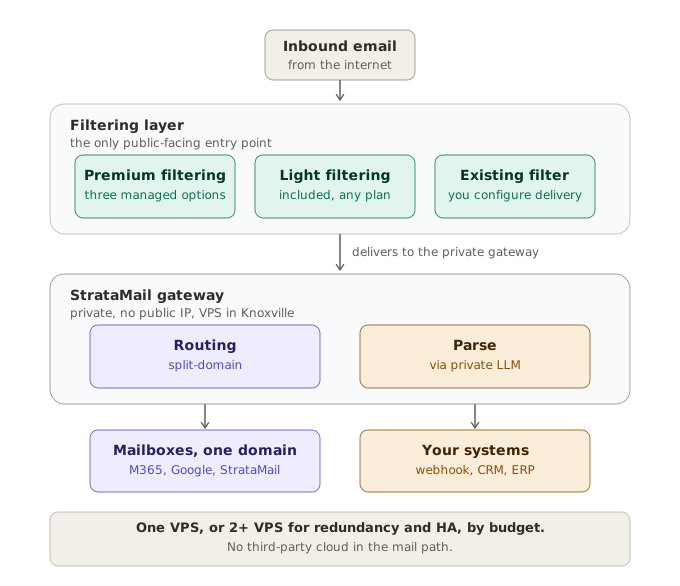
The filtering layer is the only public door
Inbound mail first reaches a filtering layer, and it is the only part of the path exposed to the internet. You choose how that mail is filtered: one of our three premium managed filters, the lighter filter included with every plan for price-conscious teams, or your own existing filter pointed at our gateway. Whatever you choose, only clean mail moves forward.
The gateway is private
Filtered mail is handed to the StrataMail gateway, which runs on a VPS in our Knoxville facility with no public IP address. Nothing on the routing or parsing side is ever reachable from the open internet. This is where the two capabilities below actually happen — on the same gateway, not on separate systems you have to stitch together.
Routing: the right user on the right platform
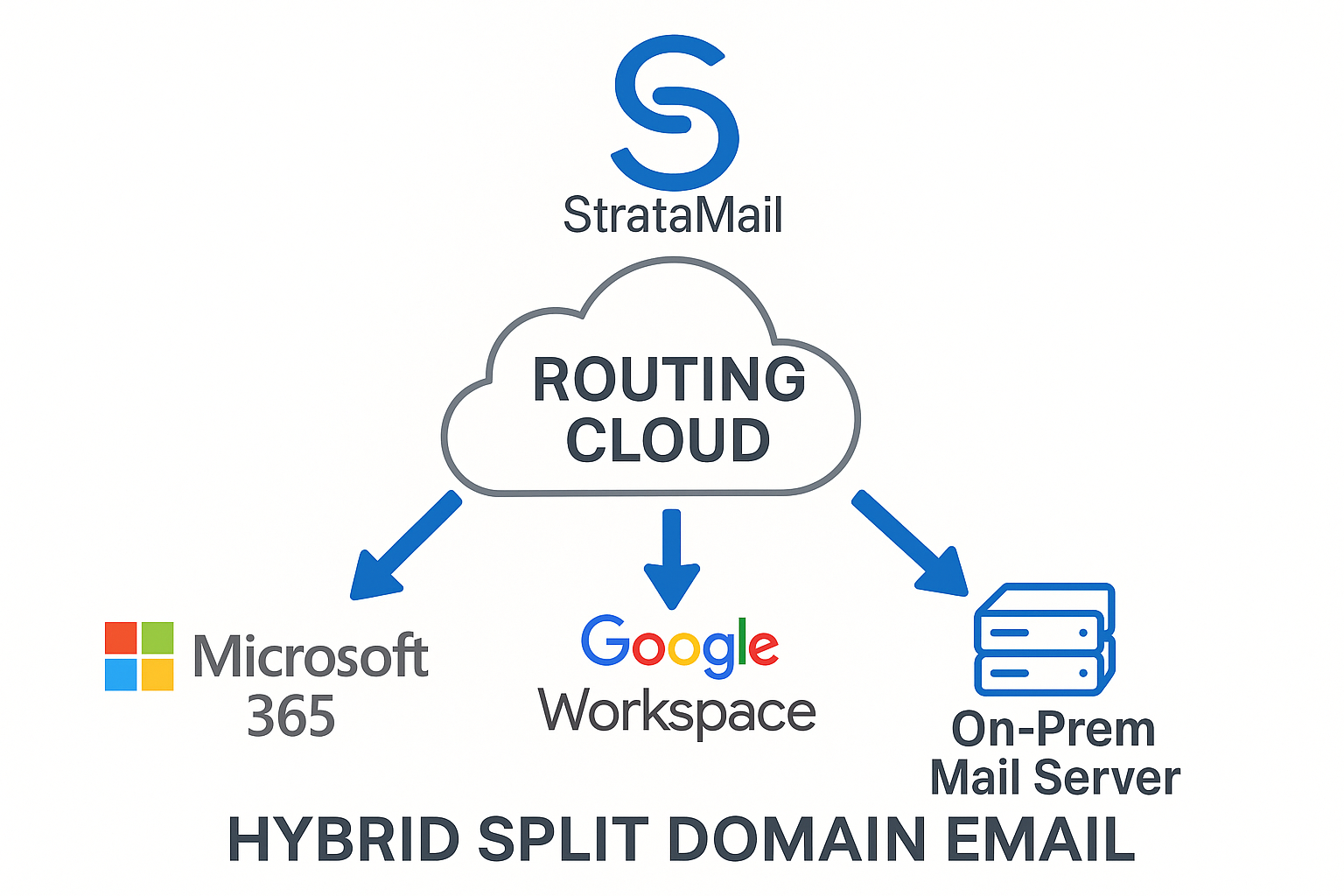
Under a single domain, the gateway routes each address to wherever it belongs — Microsoft 365, Google Workspace, or a StrataMail mailbox. You license the heavy platforms only for the people who need them and put everyone else on lower-cost mailboxes, all invisible to the people emailing you. This is split-domain routing.
Parsing: turning email into action
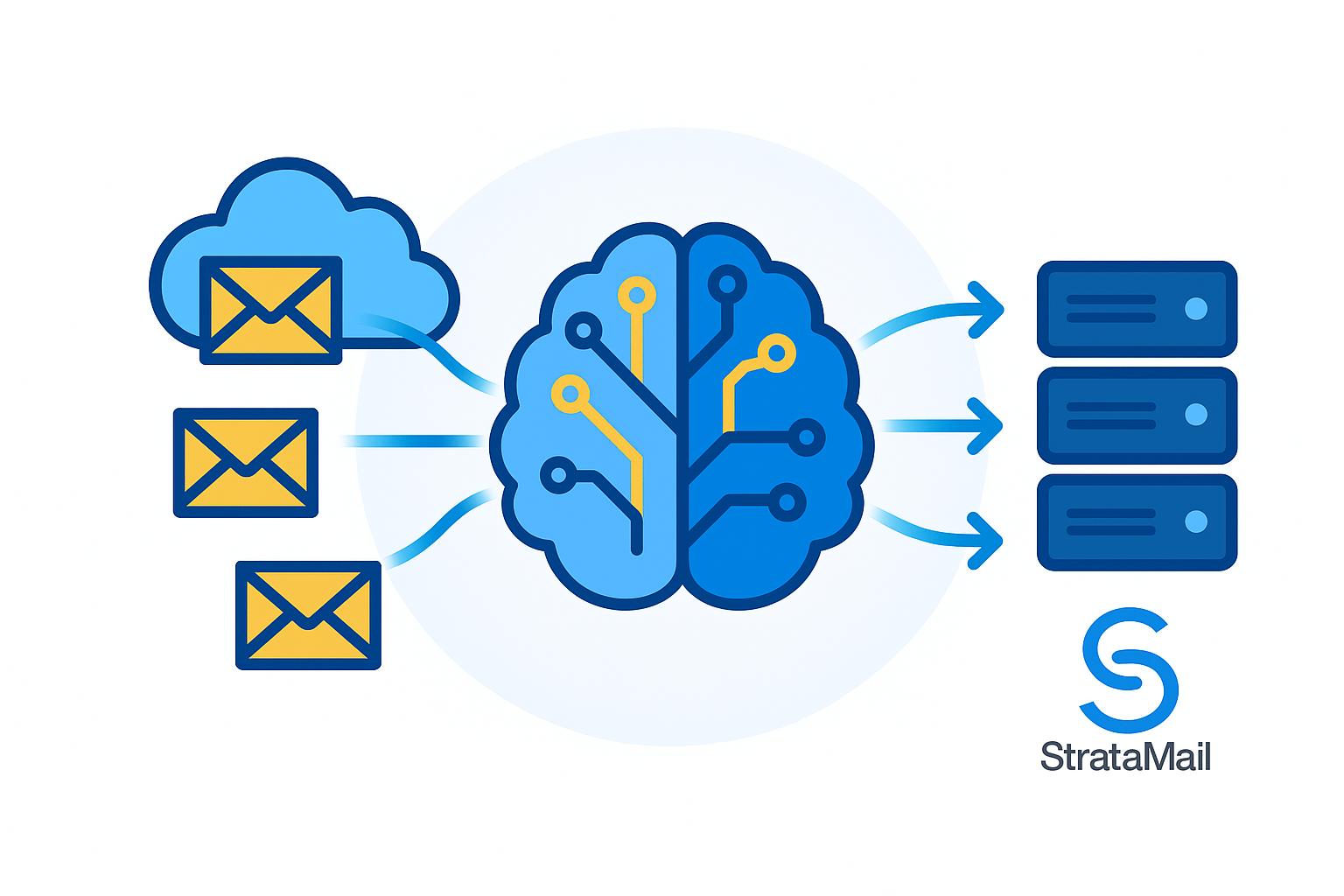
For mail that should trigger work, the gateway reads the message and its attachments, extracts the fields that matter, and posts a clean, structured event to your webhook, CRM, or ERP. When your data cannot leave your network, the reading is done by a private model on dedicated hardware — message content never goes to a third-party cloud service.
One VPS, or several for redundancy
A single VPS handles standard volume. When the gateway cannot be a single point of failure, we run it across multiple VPS for redundancy and high availability. How far you take that is a budget decision, scoped to what your operation actually needs.
Use one piece, or all of it
Filtering, routing, and parsing are the same gateway doing more work, not three products. Your existing mail platforms stay where they are; the gateway slots into the path your mail already takes. Start with the piece that solves today's problem, and add the others when you are ready.
See how this maps to your mail
The right design depends on your mail, your platforms, and how much redundancy you need. Tell us what you are working with and we will map it.
Describe Your Email Challenge Schedule a Discovery CallNext step
Talk to us about Email Intelligence
Describe Your Challenge Schedule a CallOr call 866.790.4678
 Enlarge Picture
Parsing & Routing Platform
Split-Domain Routing
Email Filtering
Contact Sales
Enlarge Picture
Parsing & Routing Platform
Split-Domain Routing
Email Filtering
Contact Sales Tell us about your Email Intelligence needs
Describe your situation and we will look into it and get back to you.
Describe Your Challenge Schedule a Call